Article • 01.12.2026

Swiss team in focus

Growing market for ZODIAK GE

Swiss customs is moving quickly to implement the new electronic customs system, Passar, in an agile and phased approach. DAKOSY is responding to the new requirements by quickly intregrating them in their ZODIAK GE customs software. The Swiss market is increasingly becoming a growth market for DAKOSY. An interdisciplinary Swiss team at DAKOSY — consisting of a project manager, a demand manager, and a project owner, all working together with four developers — is dedicated exclusively to this line of business.

Our colleagues in Switzerland
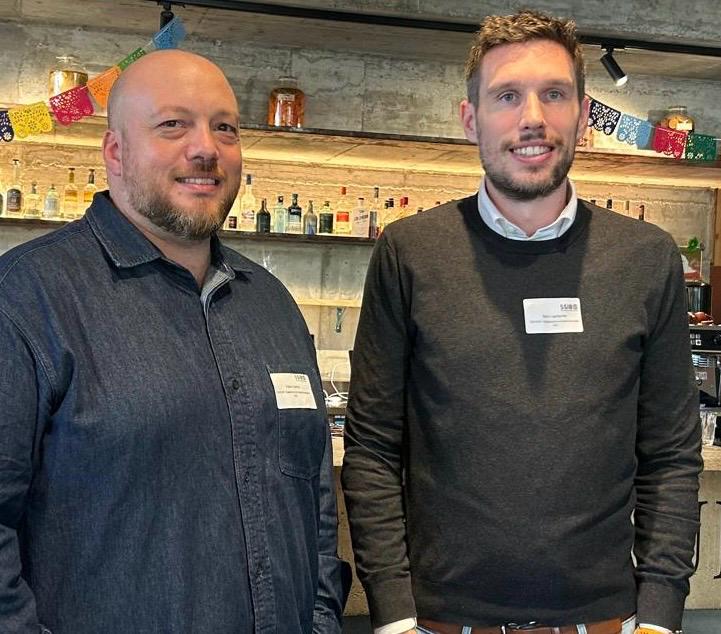
Björn Lamberikx (right) and Fabio Carrino (left) at the Swiss School for International Business in October 2026.

DAKOSY has established a direct link between the Alpine region and the Hanseatic city of Hamburg. In Switzerland, project manager Björn Lamberikx and demand manager Fabio Carrino keep a close eye on the Swiss logistics market. In Hamburg, a four-person development team led by project owner David Korndörfer implements the requirements of customs authorities and industry players into the ZODIAK GE software.

Close to both customers and customs

“Our goal is to keep our software solution as standardized as possible for the German and Swiss markets while still taking country-specific requirements into account,” says Björn Lamberikx, outlining the task. That’s not so easy. Whereas Germany has the ATLAS customs system, the Swiss are currently operating with two different customs systems. Swiss customs is undergoing a transformation process that will span several years and involves the step-by-step replacement of the existing e-dec system with the new Passar system. At the core are long-standing customers, for whom DAKOSY is making the transition as smooth and seamless as possible. In addition, there are an increasing number of new customers who are using the customs system changeover as an opportunity to make the switch to ZODIAK GE.

Project Manager Lamberikx is the primary point of contact for both customs authorities and customers. For new customers, he assesses their specific needs and plans the implementation in accordance with their operational processes. He represents DAKOSY in two Passar working groups at Swiss customs — one for the business community and one for software development, thereby covering both sides.

“Our goal is to keep our software solution as standardized as possible for the German and Swiss markets while still taking country-specific requirements into account.” 
Björn Lamberikx, Projevc manager at DAKOSY

When customs dictates the pace

Customer requirements and customs regulations must be translated into specific development tasks. David Korndörfer oversees this interface. As the project owner, he transforms customs and customer requirements into a logical IT workflow featuring “sprints” and “tickets” for the development team and prioritizes the tasks. Speed and flexibility are particularly crucial during the introduction of Passar. This is due to Swiss customs’ agile approach to digitalization.

This approach, combined with the phase-by-phase replacement of the existing customs system while daily operations proceed as usual, results in a tight schedule for the software service provider. Compared to Germany, where there is typically about half a year to implement changes after an ATLAS release is published, the agile process often leaves the developers on the Swiss team with only a few days to incorporate changes that are frequently communicated on short notice.

Korndörfer and his team are currently in the midst of preparations for the rollout of Passar Import. For the past few months, they have been implementing the necessary interfaces, integrating new message formats, and incorporating the relevant customs requirements into the software. DAKOSY’s testing department checks to make sure everything is working properly. “In October, we delivered the second stage of Passar Import to our customers. We’re pretty much on schedule,” says Korndörfer happily. Delivery of the third stage of the rollout is expected to take place in April/May 2027, followed by the termination of e-dec Import on October 1, 2027. Of course, this is contingent on the timeline of Swiss customs remaining unchanged.

Customs know-how down to the smallest detail

“I consider the Swiss customs service’s agile approach to be very effective,” confirms Fabio Carrino. A certified customs broker with more than 20 years of experience in customs and foreign trade, he joined the Switzerland team in March 2026. “Speed and attention to detail” characterize his work. Based in the border triangle near Basel, he manages existing customer inquiries as a demand manager.“ In Switzerland, it takes a truck no more than two hours to reach the Swiss border. That leaves only a narrow window of time to optimally prepare for customs clearance,” explains Carrino. Clarifying customs-related questions for his customers is part of his everyday business. And if he is ever unable to provide an answer, he can draw on a broadly diversified Swiss network. In Switzerland, DAKOSY is a member of several organizations, including the foreign trade association swiss export, the Swiss Shippers’ Council (SSC), the Swiss Logistics Network Association (VNL), and the Association of Swiss Freight Forwarding and Logistics Companies (SPEDLOGSWISS).

Other interesting articles