Interview • 10.12.2025
Creation, not administration
A discussion with Melanie Schmaljohann, Head of the Hamburg Main Customs Office
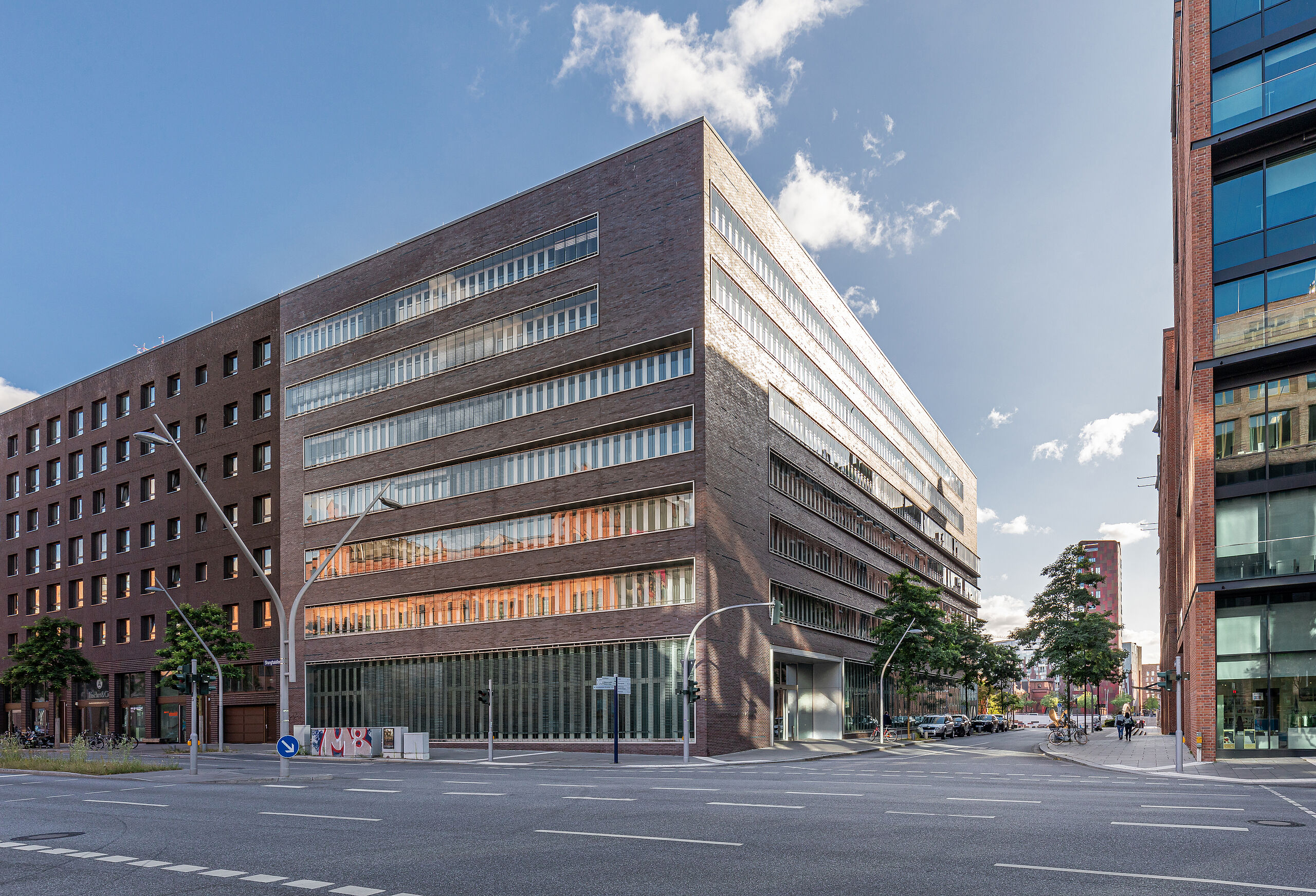
For the past ten months, Melanie Schmaljohann has been head of the largest customs office in Germany, located in the heart of Hamburg's HafenCity. In an interview with DAKOSY Magazin, the 50-year-old attorney provides insight into her new workplace, which from a technical viewpoint is anything but staid. The focus is on factors such as collaboration, communication, and natural intelligence.
Interview with Melanie Schmaljohann
for the latest issue of the magazine
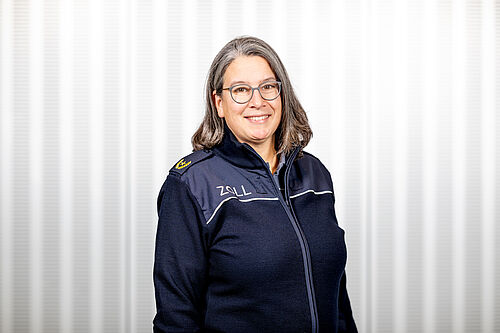
Melanie Schmaljohann has been head of the Hamburg Main Customs Office since February 2025. “I know the Swiss border, now I'm in the port,” says the 50-year-old attorney with a smile. But thanks to the various departments she has worked in since joining the customs administration in 2004, she knows that she can quickly familiarize herself with new topics. Her career has taken her to Karlsruhe, Nuremberg, and Neustadt/Weinstraße, among other places. From 2005 to 2012, she also trained managers—a topic that remains close to her heart to this day. In 2017, she returned to her birthplace of Hamburg, most recently heading the import department at the German General Directorate of Customs (GZD). For Schmaljohan, the only thing Hamburg lacks is the proximity to France—a country with which she has many connections. She earned a degree in European law in Strasbourg and later resided in Alsace under a special permit. This permit is required for civil servants who choose to reside outside Germany while in federal service.
(Photo: Hamburg Main Customs Office)
In February, you took over as head of Germany's largest customs office. You describe the position as “the best job there is in public administration.” What appeals to you about your role?
It really is my dream job. Our Main Customs Office — the largest in Germany — is incredibly exciting and diverse. We handle all the tasks that arise at the local level, and the port brings a special dynamic to the office. I am surrounded by a wide variety of tasks, creative freedom, and people who are committed to their work. Every morning when I get on the train in Tornesch, I look forward to going to work. It's a wonderful feeling.
The largest main customs office in Germany—that's quite impressive. Do you have a few key statistics to help us visualize this better?
We are the largest of a total of 41 Main Customs Offices, both in terms of our 2,100 employees and our revenue. Last year, we collected some €28 billion in duties, contributing one-fifth of the total revenue of German customs. Though most people primarily associate the port with customs duties, these in fact only amount to €1.5 billion. Import sales tax is the second largest component, at €12.8 billion. What accounts for the bulk of our revenue is excise duties, at €13.5 billion, which mainly come from the energy and mineral oil sectors.
Which issues are currently the most pressing for the Main Customs Office with regard to Hamburg as a commercial center?
Due to the number and size of the companies involved, the excise duties sector requires a large number of staff. Another focus is on financial auditing of illegal employment. We want to prevent illegal employment and thus protect our social systems. At the port, customs procedure simplifications and the “Authorized Economic Operator AEO” take up a lot of resources. On one hand, these options speed up clearance. On the other hand, they result in a substantial administrative workload. We handle over 15,000 authorizations, approvals, and simplifications for over 5,800 economic operators.
The massive increase in drug smuggling has prompted the introduction of new measures to increase port security. One of these measures is the implementation of digital releases via German Ports, which started operation on 1st October. From your agency's perspective, what significance does this have for the port?
The digitalization of releases has effectively eliminated an existing security vulnerability in the import process. This has a positive impact on hazard prevention in the port. From the customs perspective, it has proven successful in establishing heightened security and the fight against smuggling as a shared responsibility to which everyone contributes, rather than leaving it solely to the authorities.
I believe it is crucial to understand that drug-related crime affects the city of Hamburg as a whole. It does not end at the port boundaries, but brings with it violence, poverty, and money laundering—none of which we want here.
The Port of Hamburg is a major hub for global trade. To what extent is rapid customs processing on the agenda for customs authorities?
This issue is a top priority for me. Processing must be carried out quickly. We have been very successful in this regard this year. We have no significant processing backlogs. It is our goal to process declarations as quickly as possible.
I would like to take this opportunity to expressly promote the use of preliminary customs declarations. They are like gaining a free time slot. While the goods are still underway at sea, the preliminary customs declaration can be submitted. Any issues can then be dealt with before the cargo arrives at the port. Provided that all documents are available and the declaration is correct, the goods will be released immediately upon final presentation. Many economic operators already take advantage of this option. Around two-thirds of shipments are declared to customs in advance.
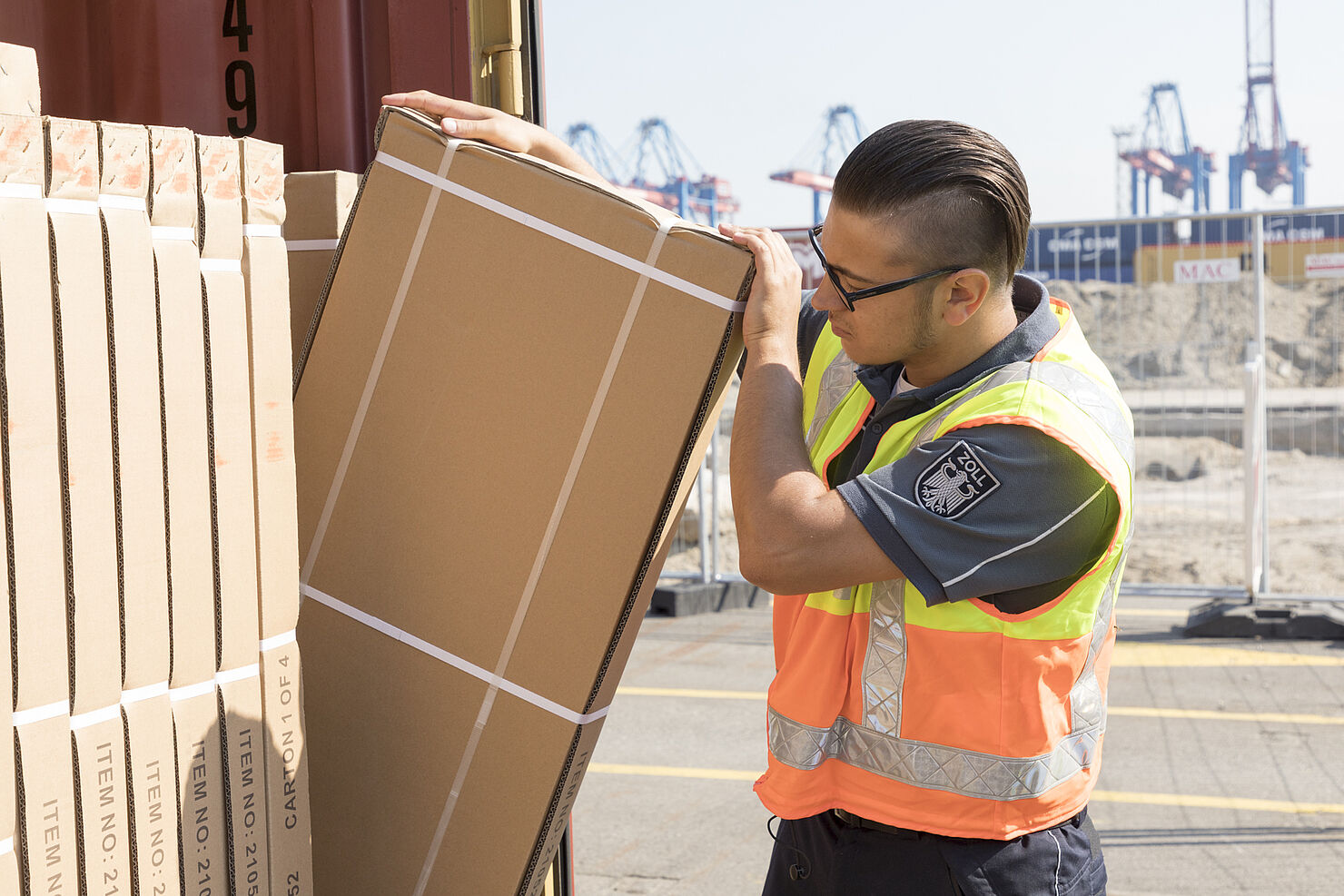
Hamburg is known for its excellent cooperation between customs and the private sector. Why is this exchange so important?
Collaboration in Hamburg is very close. We share the common goal of ensuring fast and smooth processing. Early dialogues—for example, with software service providers about technical innovations—enable all parties involved to adapt to changes promptly and ensure that processes function properly from the outset. The principle of early communication also applies to new laws and regulations. As a rule, there is not just one single way to implement something, but rather a legal corridor. Within this scope for interpretation, we work with economic operators to find solutions that both meet our administrative objectives and fit in with the processes of those involved. This cooperation works very well.
How would you rate the current level of digitalization in customs processing?
For customs processing, we use ATLAS, an electronic customs system that handles all customs procedures digitally. The import module, which was the oldest within the ATLAS architecture, is currently being completely revamped. For users, this will be reflected in more user-friendly interfaces and improved assessment options, among other things.
At the same time, we are faced with the challenge of having to use additional systems due to the increasing number of EU projects and databases. This has a noticeable impact on operational processing. When civil servants have to work in several systems at the same time, it slows down the process. Our long-term goal is therefore to use interfaces to bundle as much information as possible into a single system.
Where do you see room for improvement?
One example of untapped potential is the ATLAS application ZELOS. It offers the possibility of completely eliminating emails with scanned attachments or original documents and instead making documents available in a structured manner in ATLAS. However, in recent years, our main focus has been on numerous mandatory changes, such as those related to Brexit or e-commerce. There was little time left for additional solutions that would have increased comfort and speed but were not strictly necessary. This makes us all the more hopeful to see ZELOS more widely used. It would significantly speed up processes while also improving quality and traceability.
What innovations and changes should economic operators keep an eye out for in 2026?
The CBAM Regulation will be fully applied to imports as of January 1st. It serves to link CO₂ emissions from imported goods to a compensation mechanism scaled to the EU CO₂ price, thereby preventing unfair market distortions. The goods covered include cement, fertilizers, iron, steel, and aluminum. In the future, these will only be released for free circulation if the declarant is an authorized CBAM declarant.
For exports, the re-export system (WKS) is being introduced as a new ATLAS specialized application. Starting as of July 1st, exit summary declarations and re-export notifications must be submitted via the WKS. This change in customs regulations is particularly important for the Port of Hamburg as a major transshipment hub.
The ATLAS procedures for centralized clearance—CCE for exports and CCI for imports—are fundamentally changing the processing of customs declarations. What impact do you expect this to have on your operational areas?
Both procedures enable companies to submit customs declarations centrally to the responsible customs office and have them processed—regardless of where the goods are physically located within the EU. That's the theory, at least. In practical terms, we are still in the very early stages. The CCE export procedure is available in ATLAS, but no economic operators are working with it yet. We are currently building the technical environment for the CCI import procedure. In future, customs administrations will have to communicate with each other across borders in order to exchange data for presentation and customs declarations. However, for companies that want to centrally declare imports at their production sites, obtaining an authorization is not enough. They must also comply with the sector-specific regulations of the importing countries and integrate these into the customs process. Given the many unknowns, we cannot assess the relevance of using this system at present.
Artificial intelligence and the use of metadata are becoming increasingly important. Where do you see potential for using such technologies in the customs context in the future?
In my view, NI, or natural intelligence, comes before AI. This aspect is being neglected in the current discussion. We need natural intelligence to feed AI. People who collect and evaluate information and thus keep the system running remain the focus. So first of all, we need well-trained staff who can operate the AI processes on a professional basis.
In relation to the Main Customs Office in Hamburg, AI can provide support, for example, by collecting and evaluating data relevant for inspections and risk analyses. However, we do not program anything ourselves here at this location; we are merely beneficiaries. Our Innovation and Digital Center, which is based at the Central Customs Authority, is responsible for AI and IT developments.
For example, the e-customs app that was launched last year was designed there. This app allows private customers to submit their customs declarations for postal and courier shipments digitally and with AI support. If all documents are submitted in advance, the delivery of parcels is significantly faster. We speak from experience, because we have a customs office here directly in our building.
In summary, customs is undergoing a process of change – from digitalization to EU harmonization. What does this process of change mean for you personally as a senior manager?
For me, change is inextricably linked to communication. During my career, I spent many years training managers. One lesson I learned during this time is that change can only succeed if I get everyone on board. This requires the ability to listen openly, take objections seriously, and address them. If you can explain why a change is necessary, people are more willing to support it — even if it does not meet all of their personal needs.